


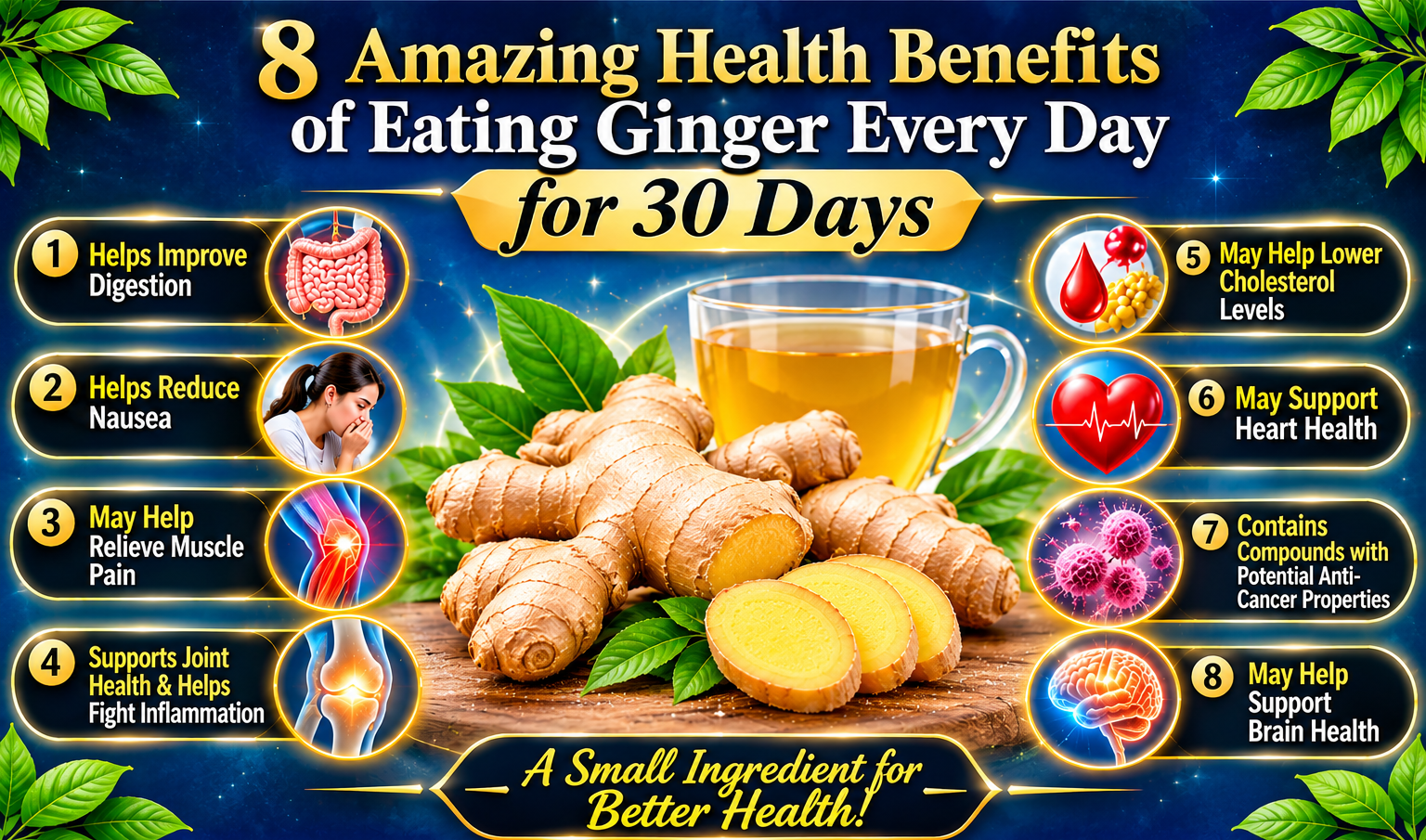

Ginger is one of the most popular ingredients used in cooking around the world. However, it has also been used for centuries as a natural home remedy for various health concerns, including nausea, digestive discomfort and pain.
Rich in natural bioactive compounds, ginger has attracted considerable attention for its potential health benefits.
But what happens when you include ginger in your daily diet for 30 days? Let’s explore eight potential health benefits of this popular natural ingredient.
1. Helps Improve Digestion
Ginger may help support digestive health by stimulating digestive activity and promoting the movement of food through the digestive tract.
Its natural compounds may also help support gastric emptying, allowing food to move more efficiently from the stomach into the small intestine.
As a result, ginger may help support digestion and reduce certain digestive discomforts.
2. Helps Reduce Nausea
Ginger is widely recognised for its potential to relieve nausea, particularly during pregnancy.
Research suggests that ginger may help reduce pregnancy-related nausea and vomiting, including symptoms associated with morning sickness.
It has traditionally been used as a natural remedy for nausea and may offer relief in certain situations.
3. May Help Relieve Muscle Pain
Ginger contains natural compounds with potential anti-inflammatory properties that may help reduce muscle discomfort.
Some research suggests that regular ginger supplementation may help reduce muscle pain, particularly following physical activity.
Its potential pain-relieving effects make ginger an interesting ingredient in studies on natural approaches to managing muscle discomfort.
4. Supports Joint Health and Helps Fight Inflammation
Ginger contains bioactive compounds that may help reduce inflammation in the body.
Research involving people with osteoarthritis suggests that ginger supplements may help reduce joint pain and improve certain symptoms associated with the condition.
Its anti-inflammatory properties may also help support joint health and overall physical well-being.
5. May Help Lower Cholesterol Levels
Maintaining healthy cholesterol levels is important for cardiovascular health.
Some clinical studies suggest that ginger supplementation may help improve blood lipid profiles, including reducing certain cholesterol and triglyceride levels.
A review of clinical trials has reported potential improvements in LDL (bad) cholesterol and triglyceride levels among people taking ginger supplements.
However, results vary across studies, and further research is needed.
6. May Support Heart Health
Ginger has also attracted attention for its potential benefits in supporting heart health.
Some studies suggest that ginger supplementation may help improve blood sugar levels and certain cardiovascular health markers.
A study involving people with type 2 diabetes found that taking ginger supplements over 12 weeks was associated with improvements in some metabolic indicators.
These findings suggest that ginger may have potential as a complementary part of a healthy lifestyle, although it cannot replace established measures for managing diabetes or protecting heart health.
7. Contains Compounds with Potential Anti-Cancer Properties
Ginger contains bioactive compounds, particularly gingerols and related substances, that have attracted scientific interest for their potential anti-cancer properties.
Laboratory studies suggest that certain ginger compounds may affect the growth and survival of cancer cells, including colorectal cancer cells.
However, these findings are still preliminary. Laboratory research does not establish that eating ginger can prevent or cure cancer in humans.
8. May Help Support Brain Health
Ginger contains antioxidants and bioactive compounds that may help protect cells against oxidative stress.
Researchers have been investigating whether these compounds could help support brain health and protect against certain age-related changes.
Some preliminary research involving ginger and related plant compounds suggests potential benefits for memory-related functions. However, more human studies are needed to establish these effects.
Conclusion
Ginger is more than just a popular cooking ingredient. Its natural bioactive compounds have been studied for their potential benefits for digestion, nausea, muscle discomfort, inflammation, cholesterol levels, heart health and brain function.
Including ginger as part of a balanced daily diet may offer nutritional benefits. However, the effects can vary depending on individual health conditions, the amount consumed and the form of ginger used.
A small ingredient can offer interesting health benefits. Make healthy food choices and take care of your well-being!
Disclaimer
This article is intended for general informational and educational purposes only. It does not constitute medical advice, diagnosis or treatment. The potential health benefits of ginger discussed here are based on available research, much of which involves supplements rather than ordinary dietary consumption. Ginger is not a substitute for prescribed medication or medical treatment. Consult a qualified healthcare professional before using ginger supplements, particularly if you take medication or have an existing health condition.
References
- NCCIH – Ginger: Usefulness and Safety
- PubMed – Ginger and Human Health
- PubMed – Ginger and Cholesterol
- PubMed – Ginger and Diabetes
- PubMed – Ginger and Cancer Research
- PubMed Central – Ginger and Brain Health
- PubMed – Ginger and Digestion