


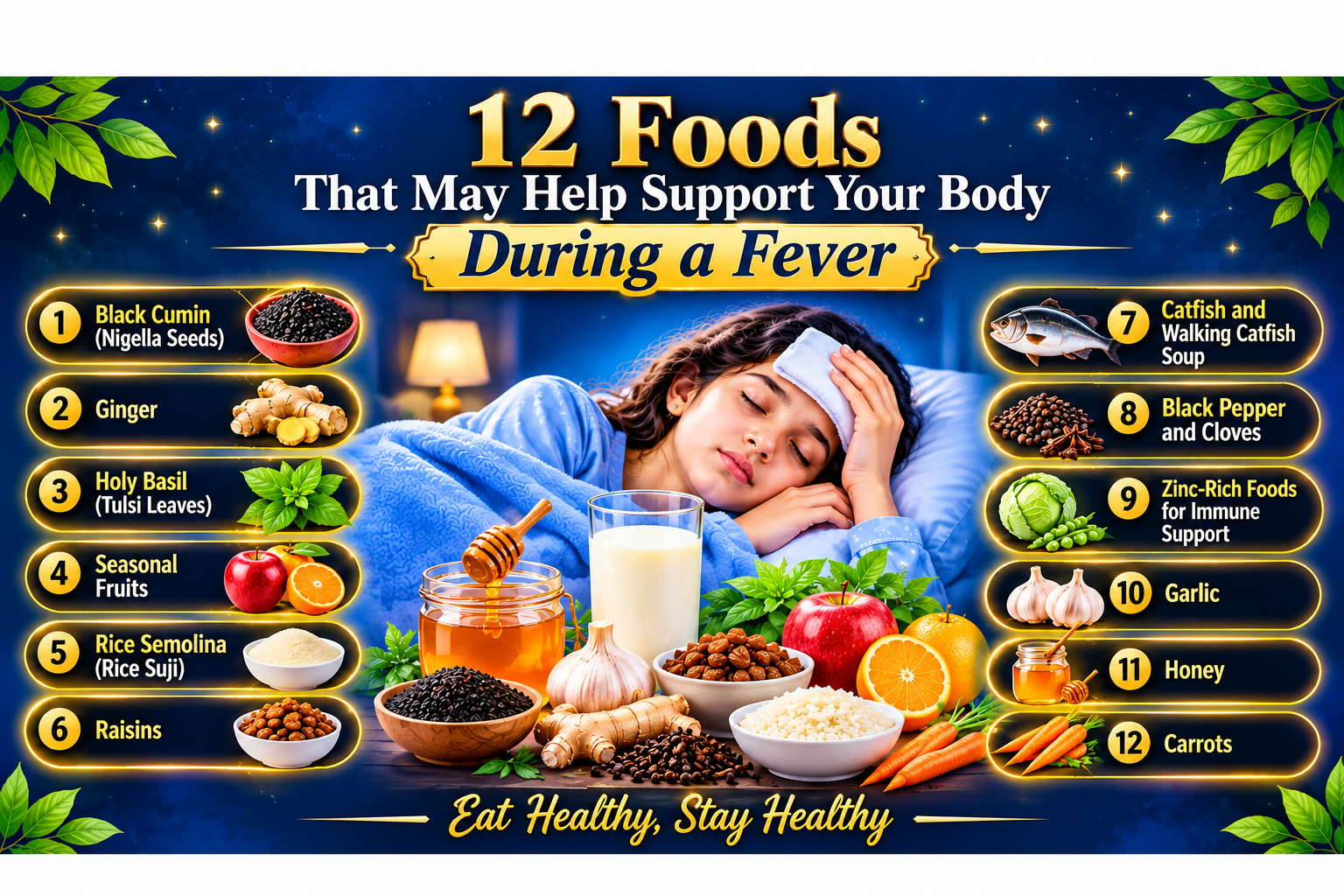
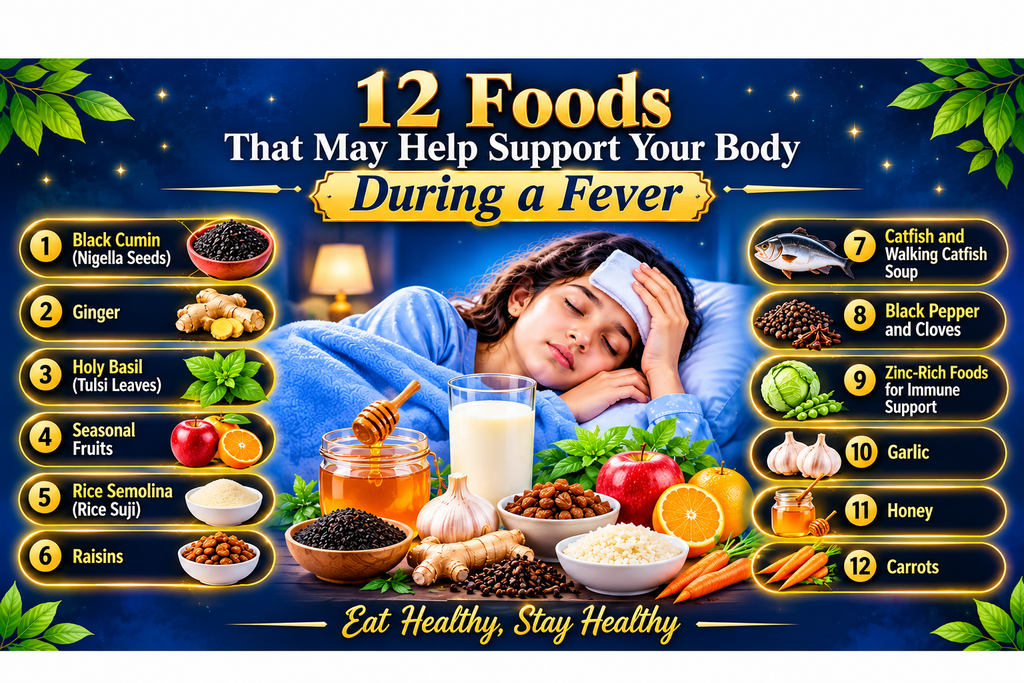
A healthy diet plays an important role in maintaining the body’s natural defence system. While preventing illness is always better than treating it, choosing nutritious foods can help support the body during recovery from a fever.
Certain foods contain essential vitamins, minerals, antioxidants and other nutrients that help maintain overall health and support the immune system.
Let’s explore 12 foods that may help support your body and promote recovery during a fever.
1. Black Cumin (Nigella Seeds)
Black cumin is traditionally valued for its medicinal properties and has long been used as a natural ingredient in various remedies. Including black cumin in your regular diet may help support overall health. It is commonly consumed as a simple mash or condiment.
2. Ginger
Ginger is a popular natural ingredient known for its beneficial properties. You can add freshly chopped ginger to tea or warm water with lemon. Ginger is traditionally used to help the body fight bacterial infections and support general wellness.
3. Holy Basil (Tulsi Leaves)
Holy basil, commonly known as Tulsi, is a medicinal herb widely used in traditional remedies.
To prepare a simple Tulsi drink, boil one teaspoon of cumin seeds and 4–6 Tulsi leaves in a glass of water. The traditional preparation suggests consuming one teaspoon twice daily.
4. Seasonal Fruits
Fruits are rich in essential nutrients that help maintain good health. Seasonal fruits provide vitamins, minerals and antioxidants that support the body’s natural defence system and may help promote recovery during illness.
5. Rice Semolina (Rice Suji)
Rice semolina is another light and nutritious food option during a fever. It can be prepared with a small amount of freshly chopped ginger and boiled vegetables, making it a simple meal.
6. Raisins
Raisins are a delicious and nutritious snack. They contain vitamin C and antioxidants, which help support the body’s natural immune functions and overall health.
7. Catfish and Walking Catfish Soup
Traditional fish soup prepared with local Shing and Magur fish can be a nutritious addition to meals during recovery. These fish provide protein and other nutrients that help support the body and replenish energy.
8. Black Pepper and Cloves
Black pepper and cloves are commonly used spices with traditional health benefits. Adding a small amount to soft rice, khichuri or boiled potatoes can make meals more flavourful while providing their natural plant compounds.
9. Zinc-Rich Foods for Immune Support
Zinc is an essential mineral that plays an important role in maintaining a healthy immune system. Among its many functions, zinc helps regulate the production of immune cells responsible for fighting infections.
Some good dietary sources of zinc include:
- Different varieties of cabbage
- Green peas
- Sesame seeds
- Flaxseeds
- Whole grains
- Beef
- Seafood
Including zinc-rich foods in your regular diet can help maintain normal immune function.
10. Garlic
Garlic is widely recognised for its traditional use in supporting health and wellness. It contains natural compounds that have been studied for their potential antibacterial and antiviral properties.
Garlic is also traditionally associated with supporting the body’s natural defence mechanisms. Raw garlic is commonly considered a concentrated source of its natural compounds.
11. Honey
Honey is a natural food ingredient traditionally used to soothe symptoms associated with colds and respiratory discomfort.
It contains natural compounds with antibacterial properties and is commonly included in traditional home remedies. A popular way to consume honey is to mix it with a cup of warm milk before bedtime.
12. Carrots
Carrots are an excellent source of beta-carotene, which the body converts into vitamin A. This vitamin plays an important role in maintaining normal immune function.
Carrot soup is a nutritious food option that provides essential nutrients. Regularly including carrots in your diet may help support the body’s natural defence system against common infections.
Conclusion
Maintaining a balanced diet with nutritious foods is an important part of supporting overall health. Black cumin, ginger, seasonal fruits, raisins, fish soup, garlic, honey and carrots are among the foods traditionally valued for their nutritional and health-supporting properties.
Including a variety of these foods in your daily meals can help provide essential nutrients and support the body’s natural immune system.
Remember: Good nutrition is an important part of a healthy lifestyle.
Disclaimer
This article is intended for general informational and educational purposes only. The foods and traditional preparations mentioned here are not intended to diagnose, treat, cure or prevent any disease. Food alone cannot cure a fever or replace appropriate medical treatment. Individual nutritional needs may vary. Please consult a qualified healthcare professional for proper medical advice, particularly if a fever persists or symptoms become concerning.
References
1. World Health Organization (WHO)
- WHO – Self Care for Health
- Covers suitable foods, fluids and easily digestible meals during fever.
2. National Institutes of Health (NIH)
- Dietary Supplements for Immune Function and Infectious Diseases
- Explains the roles of zinc, vitamin A and other nutrients in immune function.
3. Harvard T.H. Chan School of Public Health
- Nutrition and Immunity
- Explains how a balanced diet supports immune health and discusses the nutritional value of different foods.
4. NHS (UK)
- High Temperature (Fever) in Adults
- Provides guidance on hydration, rest and managing fever.
5. National Center for Complementary and Integrative Health (NCCIH)
- Colds, Flu, and Complementary Health Approaches
- Reviews scientific evidence concerning honey, garlic, zinc and other complementary approaches.
6. NIH – Zinc Fact Sheet
- Zinc: Fact Sheet for Health Professionals
- Discusses zinc’s role in immunity and evidence concerning respiratory infections.