


We all take steps to maintain good health, from eating nutritious food to keeping our homes clean and hygienic. However, some everyday household products may contain chemical ingredients that deserve our attention.
Many of us, for example, use antibacterial soaps to protect ourselves from germs. Some antibacterial products have contained triclosan, a chemical ingredient that has raised health and safety concerns.
Being aware of the products we use every day can help us make more informed choices and create a healthier living environment.
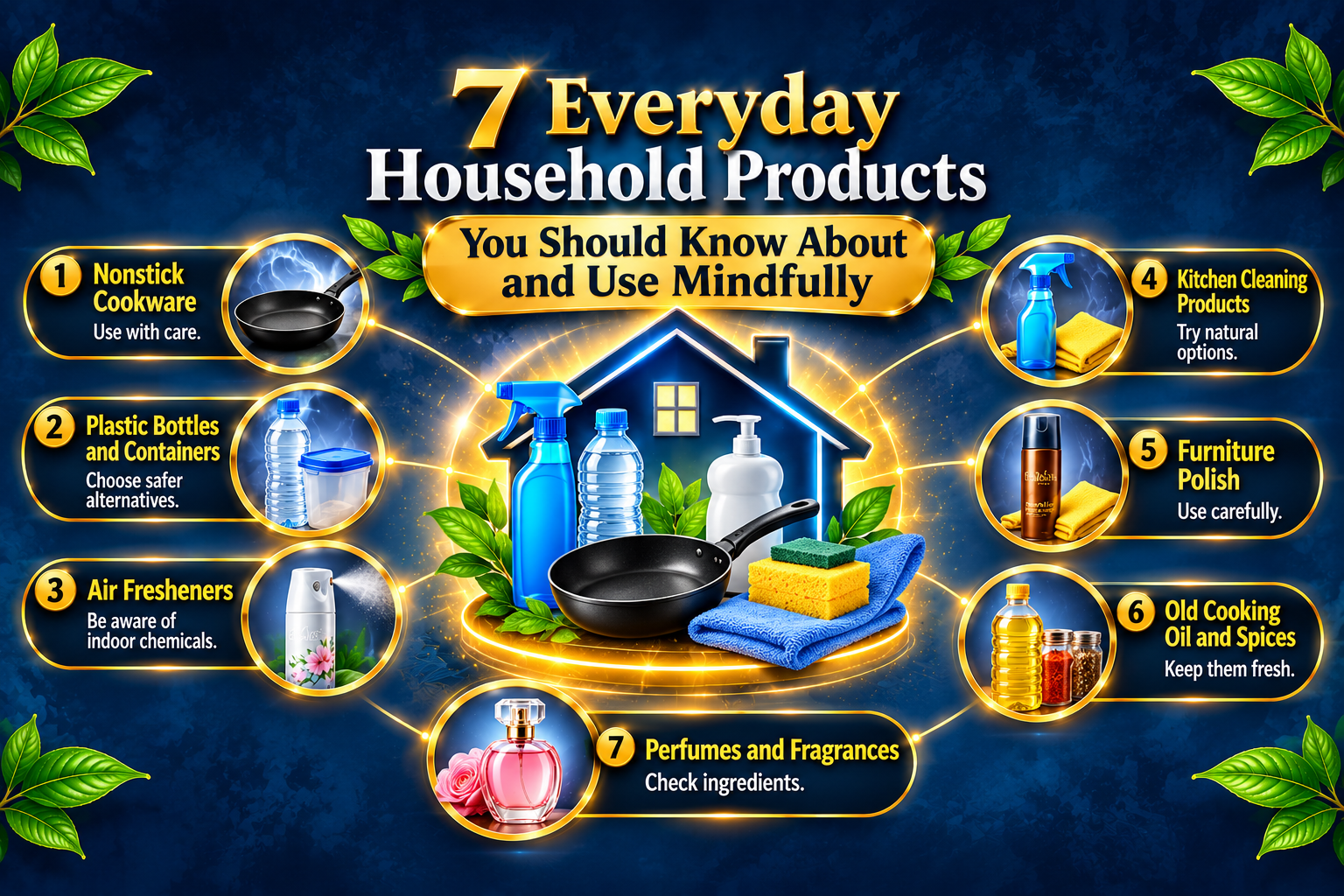
Here are seven common household products worth knowing more about.
1. Nonstick Cookware
Nonstick pans have become increasingly popular because they allow us to cook quickly using less oil and make cleaning easier.
However, older nonstick cookware may have been manufactured using a chemical known as perfluorooctanoic acid (PFOA). PFOA belongs to a group of chemicals known as PFAS, which have raised health and environmental concerns.
Nonstick coatings can also release potentially harmful fumes if cookware is overheated. Therefore, it is important to use nonstick pans according to the manufacturer’s instructions.
Stainless steel, ceramic and cast-iron cookware are alternative options worth considering.
2. Plastic Bottles and Containers
Some plastic bottles and food containers may contain bisphenol A (BPA), a chemical used in the production of certain plastics and food packaging materials.
There are concerns about BPA exposure, particularly when food or beverages come into contact with certain plastic materials.
Using glass bottles, glass containers or stainless steel alternatives can be a practical choice. It is also important to use plastic containers according to their intended purpose, particularly when heating food.
3. Air Fresheners
Air fresheners are commonly used to spread pleasant fragrances throughout our homes and eliminate unwanted odours.
However, some air fresheners contain chemical compounds that can affect indoor air quality. Ingredients and emissions may include volatile organic compounds (VOCs), which can contribute to indoor air pollution.
Depending on the product and level of exposure, certain fragrances and chemicals may cause irritation or discomfort in sensitive individuals.
Keeping rooms properly ventilated and choosing household fragrance products carefully can help maintain a more comfortable indoor environment.
4. Kitchen Cleaning Products
We regularly use liquid cleaners and other cleaning products to keep kitchen sinks, stoves and countertops clean.
Although these products help maintain household hygiene, some contain chemical ingredients that may cause irritation or other health concerns if used improperly.
As alternatives for certain everyday cleaning tasks, lemon juice and baking soda can be useful household options.
5. Furniture Polish
Various sprays and polishing products are available for cleaning furniture, removing stains and restoring the appearance of wooden surfaces.
However, some furniture polishes contain chemical ingredients, including solvents, that may cause skin or eye irritation or other health effects if they come into contact with the body or are inhaled.
Using these products carefully and following the instructions on their labels is important.
6. Old Cooking Oil and Spices
We often use different spices and cooking oils to enhance the flavour of our meals.
However, storing cooking oil and spices for extended periods can affect their freshness and quality. Over time, cooking oil may become rancid, while spices can gradually lose their freshness and flavour.
Using fresh ingredients and storing cooking oils and spices properly can help preserve their quality and make every day cooking more enjoyable.
7. Perfumes and Fragrances
Perfumes and fragrances are popular personal-care products used to create a pleasant scent.
However, perfume formulations can contain complex mixtures of different natural and synthetic chemical ingredients. Some fragrance ingredients may cause skin irritation or allergic reactions in sensitive individuals.
Therefore, it is worth paying attention to product ingredients and choosing fragrances that are suitable for your skin.
Final Thoughts
Many of these products are part of our everyday routines, making it important to understand what they contain and how to use them appropriately.
By making informed choices, following product instructions and paying attention to freshness and proper storage, we can take simple steps towards maintaining a cleaner, more comfortable and healthier home environment.
Disclaimer: This article is intended for general health awareness and educational purposes only. It should not be considered medical advice, diagnosis or treatment. The potential health effects of household products depend on their ingredients, exposure levels and individual sensitivity. Always follow manufacturers’ instructions and consult a qualified healthcare professional if you have health concerns.
References
- Health Canada: The Safe Use of Cookware and Bakeware — nonstick cookware and PFOA.
- US FDA: Questions and Answers on BPA — BPA and food-contact materials.
- American Lung Association: Fragrances and Their Effects on Health — fragrances and indoor air quality.
- American Lung Association: Cleaning Supplies and Household Chemicals — household cleaners, air fresheners and furniture polish.
- MedlinePlus: Furniture Polish Poisoning — potential exposure risks.
- USDA: Can Oil Be Reused Safely? — cooking oil storage and quality.
- US FDA: Fragrances in Cosmetics — fragrance ingredients and sensitivities.