


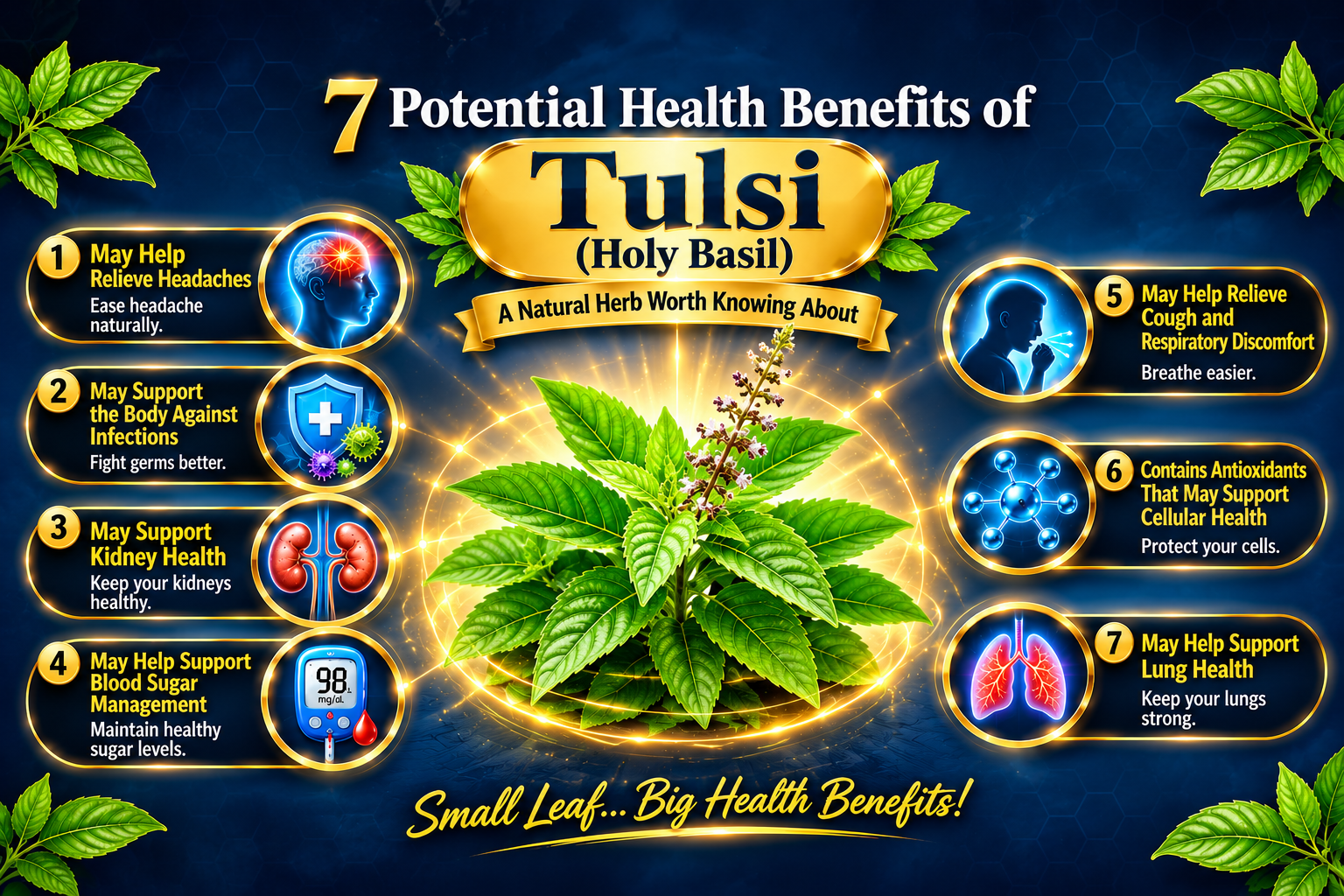
Tulsi, also known as Holy Basil, is a herb widely valued for its medicinal properties. Often referred to as the “Queen of Herbs,” tulsi has a long history of use in traditional medicine.
Regular consumption of tulsi leaves is traditionally associated with several health benefits. This easily accessible herb contains various natural compounds, including antioxidants, that have attracted attention for their potential health-supporting properties.
From headaches and respiratory discomfort to blood sugar management, tulsi has been studied for its possible role in supporting overall well-being.
Let’s explore seven potential health benefits of tulsi leaves.
1. May Help Relieve Headaches
Headaches are among the most common health complaints and can affect anyone at any time. Although they may begin as mild discomfort, they can sometimes become more severe.
Tulsi contains natural plant compounds with potential anti-inflammatory properties. Traditionally, it has been used to help relieve headaches and provide comfort during conditions associated with headaches, including migraines and sinus-related discomfort.
2. May Support the Body Against Infections
Tulsi leaves contain natural compounds that have demonstrated antibacterial and antifungal properties in research.
These properties have attracted scientific interest because of their potential role in supporting the body’s natural defence mechanisms against certain microorganisms.
3. May Support Kidney Health
Tulsi has traditionally been used in herbal medicine for supporting kidney health.
Some traditional practices associate tulsi consumption with kidney stone management. However, its effectiveness in removing or treating kidney stones has not been established through sufficient clinical evidence.
4. May Help Support Blood Sugar Management
Tulsi leaves contain antioxidants and naturally occurring compounds, including methyl eugenol.
Some studies suggest that tulsi may help support healthy blood glucose regulation. Research has also explored its potential influence on insulin-related activity in the body.
These findings have made tulsi an interesting subject of research in relation to metabolic health and blood sugar management.
5. May Help Relieve Cough and Respiratory Discomfort
Tulsi is traditionally known for its use in relieving coughs and respiratory discomfort.
Its natural compounds have been studied for potential antitussive properties, which may help with coughing, and expectorant properties, which may support the removal of mucus from the respiratory tract.
For generations, tulsi leaves have been used in traditional home remedies for cough and chest congestion.
6. Contains Antioxidants That May Support Cellular Health
Tulsi leaves contain antioxidant compounds that help protect cells against oxidative stress.
Certain compounds found in tulsi have attracted scientific interest for their potential anticancer properties. Laboratory research has explored their effects on breast and oral cancer cells.
However, these findings do not establish that consuming tulsi leaves can prevent or treat cancer in humans.
7. May Help Support Lung Health
Tulsi contains natural plant compounds, including polyphenols, which have been studied for their antioxidant and anti-inflammatory properties.
These compounds may have potential benefits for supporting respiratory health. Traditional herbal practices have also valued tulsi for its association with breathing comfort and lung wellness.
Conclusion
Tulsi is a widely valued medicinal herb with a rich history in traditional healthcare. Its natural antioxidants and other plant compounds have attracted scientific interest for their potential health-supporting properties.
Although tulsi offers several promising areas for research, more high-quality human studies are needed to establish its effectiveness against specific diseases.
Including herbs as part of a balanced lifestyle can be beneficial, but tulsi should not replace prescribed medicines or professional medical treatment.
Disclaimer
This article is intended for general informational and educational purposes only. The health benefits discussed are based on traditional uses and preliminary scientific research. They should not be considered proven treatments or methods of preventing diseases. Tulsi is not a substitute for professional medical advice, diagnosis, or treatment. Always consult a qualified healthcare professional before using herbal remedies to manage a health condition.
References
- Jamshidi, N. & Cohen, M. M. (2017). The Clinical Efficacy and Safety of Tulsi in Humans: A Systematic Review of the Literature. Evidence-Based Complementary and Alternative Medicine. Read the research paper
- Memorial Sloan Kettering Cancer Center. Holy Basil: Purported Benefits, Side Effects, and More. Read the medical overview
- MSD Manual. Holy Basil: Evidence, Benefits and Safety. Read the medical overview