


Getting enough sleep at regular times every day is essential for maintaining good health. A peaceful night’s sleep is necessary to stay refreshed and energetic throughout the day. When sleep is disrupted, our daily routine can become unbalanced, and our productivity may decline.
Lack of sleep can lead to both physical and mental health problems. Not getting enough sleep at night may cause irritability, daytime fatigue, and a constant feeling of frustration. Even simple daily activities can become difficult and unpleasant.
There can be many reasons behind sleep difficulties. Most causes are temporary and can often be addressed through simple lifestyle changes. However, some conditions may require medical attention or medication. For example, people experiencing depression, mania, or schizophrenia may suffer from sleep disturbances. In such cases, it is important to follow a doctor’s advice.
What Does Good Sleep Mean?
Good sleep can generally be described by the following characteristics:
- Falling asleep within 30 minutes of going to bed.
- Getting 6–8 hours of sleep every night, depending on age.
- Waking up no more than once or twice during the night.
- Feeling refreshed and free from tiredness after waking up.
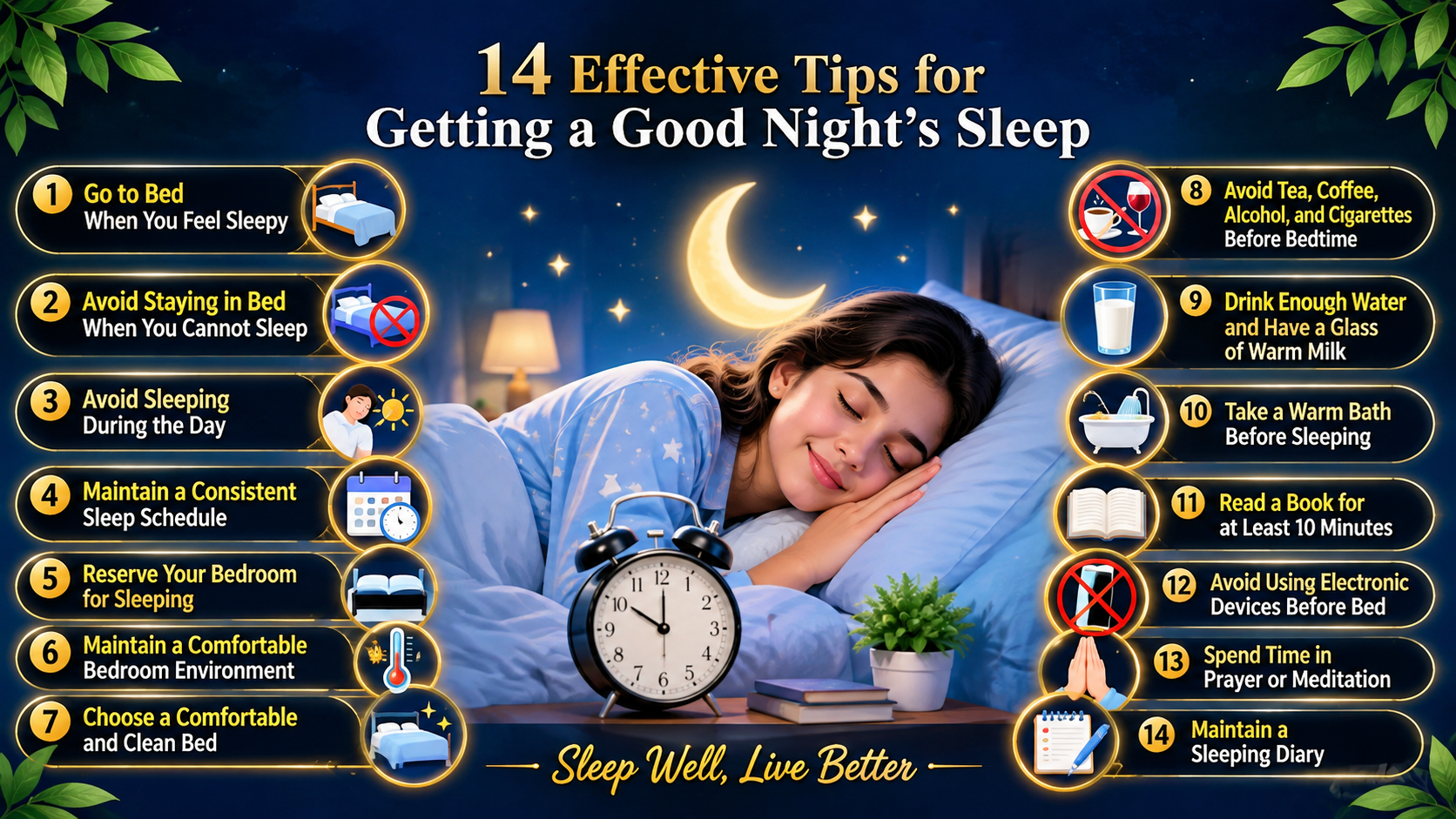
14 Effective Ways to Improve Your Sleep
Let’s explore some simple and effective ways to enjoy better sleep at night.
1. Go to Bed When You Feel Sleepy
Avoid going to bed until you actually feel sleepy. This can help establish a more natural sleeping routine.
2. Avoid Staying in Bed When You Cannot Sleep
If you cannot fall asleep, do not spend unnecessary time lying awake in bed.
3. Avoid Sleeping During the Day
Try to avoid daytime sleeping so that you can maintain a regular sleep routine at night.
4. Maintain a Consistent Sleep Schedule
Try to go to bed at the same time every night and wake up at the same time every morning. Maintaining a regular schedule can help improve your sleeping habits.
5. Reserve Your Bedroom for Sleeping
Keep your bedroom primarily for sleeping. Avoid activities such as eating, studying, or watching television in bed.
6. Maintain a Comfortable Bedroom Environment
Keep your bedroom temperature comfortable—not too hot or too cold. It is also important to keep the room away from loud noises and noise pollution.
7. Choose a Comfortable and Clean Bed
Your bed should be comfortable—not too soft or too hard. Make sure your sleeping area is also clean and well-maintained.
8. Avoid Tea, Coffee, Alcohol, and Cigarettes Before Bedtime
Stay away from tea, coffee, alcohol, and cigarettes before going to sleep. If possible, consider giving up these habits altogether.
9. Drink Enough Water and Have a Glass of Warm Milk
Make sure you drink sufficient water throughout the day. Having a glass of warm milk before bedtime may also be part of your evening routine.
10. Take a Warm Bath Before Sleeping
Taking a bath with mildly warm water before bedtime can help you relax and prepare for sleep.
11. Read a Book for at Least 10 Minutes
Spend at least ten minutes reading a book before going to bed. This can be a relaxing part of your bedtime routine.
12. Avoid Using Electronic Devices Before Bed
Avoid using smartphones, computers, or laptops before going to sleep. Give yourself some time away from electronic screens.
13. Spend Time in Prayer or Meditation
Set aside some time for prayer or meditation before bedtime. This can help you feel calm and relaxed.
14. Maintain a Sleeping Diary
Follow a consistent sleep schedule and maintain a sleep diary to record your sleeping habits. With guidance from a doctor, you can monitor your progress and keep track of improvements in your sleep routine.
Final Thoughts
Insomnia has become a common problem, and many people experience difficulties sleeping at night. Some people consider taking sleeping pills or other sleep medications to overcome this problem.
Although medication may help induce sleep, prolonged use can sometimes lead to dependence, which can be difficult to overcome. Sleeping pills may also have various side effects.
Therefore, adopting healthy natural sleep habits and following a consistent bedtime routine can be helpful steps towards improving sleep quality.
A good night’s sleep is an important part of maintaining a healthy and balanced life.
Disclaimer: This article is intended for general informational and educational purposes only. It should not be considered a substitute for professional medical advice, diagnosis, or treatment. Sleep requirements and sleep-related conditions vary from person to person. If you experience persistent sleep difficulties or are considering using sleep medication, consult a qualified healthcare professional.
References
These reputable sources support the article:
- CDC – Sleep and Sleep Disorders
- National Heart, Lung, and Blood Institute – Sleep Health
- NHS – How to Fall Asleep Faster and Sleep Better