


Understanding the Possible Effects of Toxins and Everyday Health Concerns
Toxins. The word often brings to mind harmful substances released by factories and industrial pollution. However, potentially harmful substances can be found in many aspects of our everyday lives.
Some may enter our bodies without our knowledge, while others may be introduced through our daily habits and lifestyle choices.
Our bodies have natural systems that help process and eliminate waste. The liver, kidneys, digestive system and other organs play important roles in maintaining this balance.
When something affects our health, our bodies may show signs that deserve attention. Although these symptoms do not necessarily indicate a toxin buildup, understanding them can help us become more aware of our overall well-being.
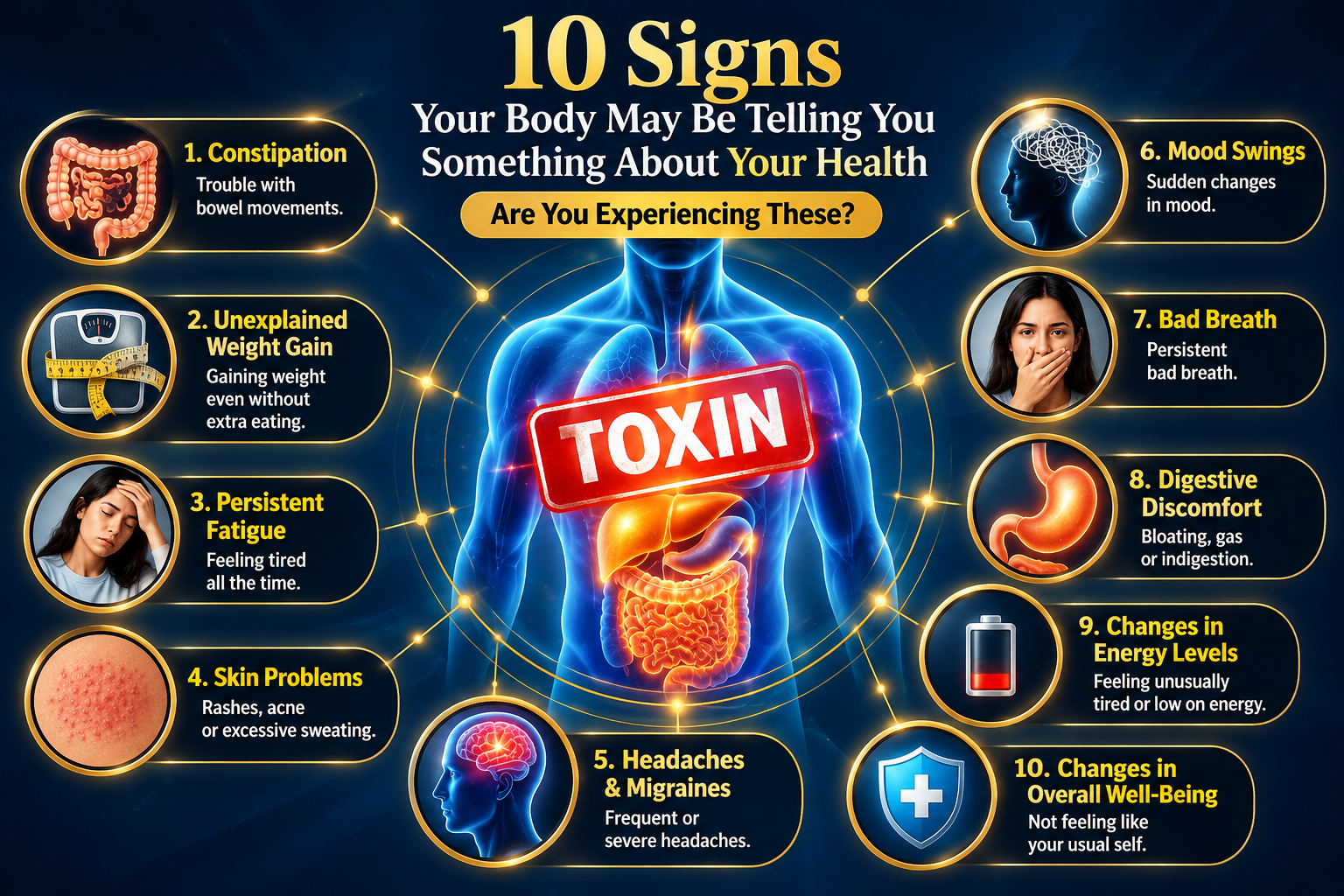
Here are 10 health-related signs worth paying attention to.
1. Constipation
The colon, also known as the large intestine, plays an important role in eliminating waste through bowel movements.
When bowel movements become irregular or difficult, it may indicate constipation. This can be associated with inadequate fluid intake, insufficient dietary fibre or changes in daily habits.
Drinking enough water, eating fibre-rich foods and including probiotic foods in your diet may help support regular bowel movements and digestive health.
2. Unexplained Weight Gain
Have you noticed your weight increasing despite making changes to your eating habits?
Unexplained weight gain or difficulty managing weight can have several contributing factors, including dietary habits, physical activity, sleep patterns and certain medical conditions.
Regular consumption of processed foods, soft drinks and foods containing high amounts of added sugar may also affect overall health and weight management.
Research has also explored how certain environmental chemicals may affect health, including their potential effects during pregnancy and on a developing child.
3. Persistent Fatigue
Feeling tired after a long day is normal. However, persistent fatigue that interferes with everyday activities deserves attention.
If routine tasks leave you feeling exhausted or you frequently lack energy, it may be a sign that something is affecting your health.
Fatigue can be associated with various factors, including inadequate sleep, nutritional deficiencies, stress and certain medical conditions.
Recognising persistent tiredness and understanding its underlying cause are important steps towards better health.
4. Skin Problems
The skin is the body’s largest organ and plays an important role in protecting the body from external substances.
Skin conditions such as boils, rashes and excessive sweating may sometimes indicate an underlying health concern.
Although the skin helps regulate body temperature and eliminate small amounts of certain substances through sweat, it is not a primary organ for removing toxins from the body.
The liver and kidneys play central roles in processing and eliminating waste products.
Persistent or unusual skin changes should not be ignored.
5. Headaches and Migraines
Headaches and migraines can significantly affect daily life.
Certain environmental exposures, dietary factors, stress and changes in sleep patterns may contribute to headaches in some individuals.
The body’s nervous system is involved in the development of pain, and changes in its activity can influence how pain is experienced.
Nitric oxide, a naturally occurring molecule in the body, also plays a role in migraine-related processes.
However, headaches and migraines are complex conditions with multiple possible causes. They are not reliable indicators of toxin accumulation.
6. Mood Swings
Changes in mood can sometimes be associated with lifestyle and dietary habits.
Highly processed foods, artificial additives and certain food ingredients have been studied for their possible effects on health and behaviour.
Some substances, including compounds that interact with the body’s hormonal systems, are also being investigated for their potential health effects.
However, mood swings and depression can have many contributing factors, including stress, sleep disturbances, hormonal changes and mental health conditions.
A balanced lifestyle and awareness of emotional well-being can help support overall health.
7. Persistent Bad Breath
Brushing your teeth regularly but still experiencing bad breath?
The cause may not always be limited to the teeth.
Persistent bad breath, also known as halitosis, can be associated with oral hygiene, gum disease, dry mouth, certain foods and digestive conditions.
Excessive consumption of sugary foods and drinks may contribute to the growth of bacteria in the mouth, potentially affecting oral health.
Other associated symptoms may include frequent belching and digestive discomfort.
Maintaining good oral hygiene and addressing underlying causes can help improve breath freshness.
8. Digestive Discomfort
Digestive discomfort can sometimes be associated with dietary habits and changes in the digestive system.
Certain foods may contribute to bloating, gas, belching or indigestion in some individuals.
Paying attention to food choices and maintaining a balanced diet can help support digestive well-being.
9. Changes in Energy Levels
Changes in energy levels may be influenced by sleep quality, nutrition, physical activity and overall health.
When the body does not receive adequate rest or essential nutrients, everyday activities may become more difficult.
Persistent changes in energy levels may warrant further attention to identify possible underlying causes.
10. Changes in Overall Well-Being
Our bodies can respond to changes in diet, lifestyle and environmental exposures in different ways.
Paying attention to unusual or persistent changes in physical and emotional well-being can help us recognise when our health needs attention.
Maintaining a balanced diet, staying adequately hydrated and being mindful of everyday habits can support the body’s natural processes.
Final Thoughts
Our bodies have remarkable natural systems that help process and eliminate waste. The liver, kidneys and digestive system work together to support these essential functions.
While constipation, fatigue, headaches, skin problems and other symptoms may indicate health concerns, they do not necessarily mean that toxins have accumulated in the body.
Understanding these signs and paying attention to persistent symptoms can help us make informed decisions about our health.
Disclaimer: This article is intended for general informational purposes only and is not a substitute for professional medical advice, diagnosis or treatment. The symptoms discussed are not specific indicators of toxin accumulation. If you experience persistent or concerning symptoms, consult a qualified healthcare professional.
References
- National Center for Complementary and Integrative Health (NCCIH) — “Detoxes” and “Cleanses”: What You Need To Know
- NIH News in Health — Do Detox Diets and Cleanses Work?
- NHS — Bad Breath
- NHS — Constipation