


Our bodies work tirelessly every day to maintain balance, support vital functions, and keep us healthy. From the food we eat to the air we breathe, we encounter different substances throughout our daily lives.
The word toxin often brings to mind harmful chemicals, environmental pollutants, and substances that may affect our well-being. While our bodies have natural systems to process and remove waste, maintaining a healthy lifestyle is essential for supporting these important functions.
The liver and kidneys play a major role in processing substances and removing waste from the body. Meanwhile, everyday habits such as eating a balanced diet, staying hydrated, getting enough sleep, and remaining physically active can help support overall health.
Certain changes in the body may be worth paying attention to. Although these symptoms do not necessarily indicate toxin accumulation, they can serve as useful reminders to look after our health.
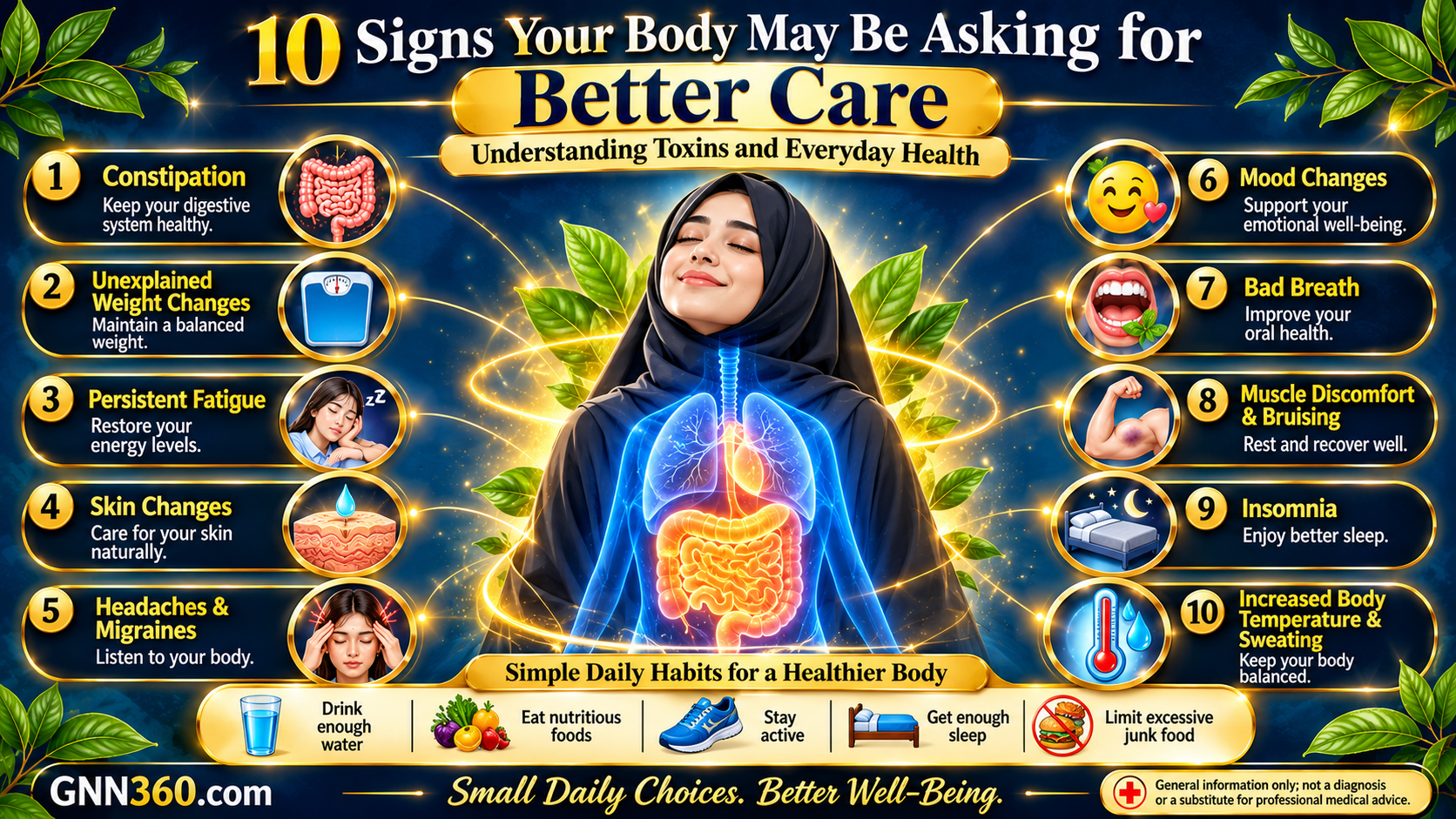
Here are 10 signs that may encourage you to pay closer attention to your body’s needs.
1. Constipation: Supporting Healthy Digestion
Regular bowel movements are an important part of digestive health. The large intestine helps absorb water and move waste through the digestive system.
When bowel movements become less frequent or difficult, it may be a sign that your digestive system needs additional support.
A fiber-rich diet, adequate fluid intake, and regular physical activity can help promote healthy bowel movements. Foods such as fruits, vegetables, whole grains, and yogurt may also contribute to digestive wellness.
2. Unexplained Weight Changes: Understanding Your Body
Have you noticed changes in your weight despite maintaining your usual eating habits?
Weight changes can be influenced by several factors, including dietary patterns, physical activity, sleep, hormones, and certain health conditions.
Choosing balanced meals, limiting excessive sugary drinks, and maintaining regular activity can help support a healthy weight.
A consistent approach to nutrition and lifestyle is often more beneficial than focusing on quick results.
3. Persistent Fatigue: Restoring Your Energy
Feeling tired after a busy day is perfectly normal. However, persistent fatigue that affects everyday activities deserves attention.
Your energy levels can be influenced by sleep quality, nutrition, stress, hydration, and overall health.
Eating regular, nutritious meals, maintaining a consistent sleep schedule, and incorporating gentle physical activity into your routine may help support your energy levels.
If tiredness continues or interferes with daily life, consider speaking with a healthcare professional to understand its cause.
4. Skin Changes: Caring for Your Skin Naturally
Your skin is the body’s largest organ and plays an important role in protecting you from the environment.
Changes such as dryness, irritation, rashes, or unusual sweating may occur for a variety of reasons, including environmental exposure, allergies, and skin conditions.
A gentle skincare routine, adequate hydration, and a balanced diet can help support healthy skin.
Remember, the skin is not the body’s primary detoxification organ. The liver and kidneys perform most of the body’s waste-processing functions.
5. Headaches and Migraines: Listening to Your Body
Headaches can affect concentration, productivity, and everyday comfort.
Common triggers may include dehydration, insufficient sleep, stress, skipped meals, and environmental factors.
Maintaining regular sleep patterns, drinking enough water, eating balanced meals, and managing stress can help support overall well-being.
People who experience recurring headaches or migraines may benefit from identifying their individual triggers and discussing them with a healthcare professional.
6. Mood Changes: Supporting Emotional Well-Being
Our physical and emotional health are closely connected.
Diet, sleep, stress, daily routines, and hormonal changes can all influence how we feel.
Eating a varied and nutritious diet, getting adequate rest, spending time outdoors, and maintaining meaningful social connections can contribute to emotional well-being.
Processed foods can be enjoyed in moderation, while a balanced eating pattern can help provide the nutrients needed for everyday health.
7. Persistent Bad Breath: Improving Oral and Digestive Health
Fresh breath is often a reflection of good oral hygiene.
Persistent bad breath may be associated with oral bacteria, gum problems, dry mouth, certain foods, or digestive conditions.
Brushing twice daily, cleaning between the teeth, gently cleaning the tongue, and drinking sufficient water can help maintain oral health.
If bad breath continues despite good oral hygiene, a dental or medical consultation may help identify the underlying cause.
8. Muscle Discomfort and Unexplained Bruising: Paying Attention to Recovery
Muscle discomfort can occur after physical activity, prolonged sitting, or everyday exertion.
Adequate rest, gentle movement, balanced nutrition, and proper hydration can help support muscle recovery.
However, unexplained bruising or persistent muscle pain should not automatically be attributed to toxins. Such symptoms may have different causes and deserve appropriate medical attention, particularly when they occur together.
Taking care of your body also means allowing sufficient time for recovery.
9. Insomnia: Creating a Healthy Sleep Routine
Quality sleep is essential for physical recovery, mental clarity, and emotional balance.
Environmental factors, stress, irregular sleep schedules, and excessive screen time before bed may interfere with restful sleep.
Creating a comfortable sleeping environment, maintaining consistent bedtime habits, and limiting late-evening caffeine can help support better sleep.
A regular sleep routine is one of the simplest ways to promote overall wellness.
10. Changes in Body Temperature and Sweating: Maintaining Balance
Sweating is a natural process that helps regulate body temperature.
Physical activity, warm weather, emotional stress, and hormonal changes can all influence how much we sweat.
Staying hydrated, wearing comfortable clothing, and allowing the body to cool down after physical activity can help maintain comfort.
Unusual or persistent sweating, particularly when accompanied by other symptoms, may be worth discussing with a healthcare professional.
Simple Daily Habits for a Healthier Body
Supporting your body’s natural functions does not require complicated routines. Small, consistent lifestyle choices can make a meaningful difference.
Here are a few healthy habits to embrace:
- Drink enough water throughout the day.
- Include fruits, vegetables, whole grains, and other nutritious foods in your meals.
- Maintain regular physical activity suited to your needs.
- Get sufficient, consistent sleep.
- Limit excessive consumption of highly processed foods and sugary drinks.
- Avoid unnecessary exposure to harmful environmental substances.
- Follow appropriate medical advice and routine health checkups.
The Bottom Line
Your body has remarkable natural systems that help maintain balance and process waste every day. The liver and kidneys are central to these processes, while healthy daily habits help support their normal functions.
Changes such as fatigue, constipation, headaches, skin irritation, or sleep difficulties can be useful reminders to pay attention to your overall health. However, these symptoms are not specific indicators of toxin buildup.
Rather than focusing on the idea of a toxin-filled body, the most positive approach is to build sustainable habits that support digestion, energy, sleep, and overall well-being.
A healthier body begins with small, consistent choices. Listen to your body, care for it daily, and seek professional guidance whenever persistent symptoms need attention.
Disclaimer
This article is intended for general health information and educational purposes only. The symptoms discussed are not diagnostic indicators of toxin accumulation and may have several possible causes. This content does not replace professional medical advice, diagnosis, or treatment. Consult a qualified healthcare professional if you experience persistent, unusual, or concerning symptoms.
References
- National Center for Complementary and Integrative Health (NCCIH) — “Detoxes” and “Cleanses”: What You Need to Know
- National Institutes of Health (NIH) — Do Detox Diets and Cleanses Work?
- Johns Hopkins Medicine — Detoxing Your Liver: Fact Versus Fiction
- NHS — Tiredness and Fatigue
- NHS — Constipation