


Almost everyone experiences acidity or acid reflux at some point in their lives.
For some people, however, these problems occur frequently and become part of their daily routine. Many struggles with recurring symptoms that can affect their comfort and everyday activities.
Eating too much, consuming spicy foods, drinking alcohol, and having caffeinated beverages may trigger acidity and acid reflux in some individuals. These conditions can sometimes cause an uncomfortable burning sensation in the chest.
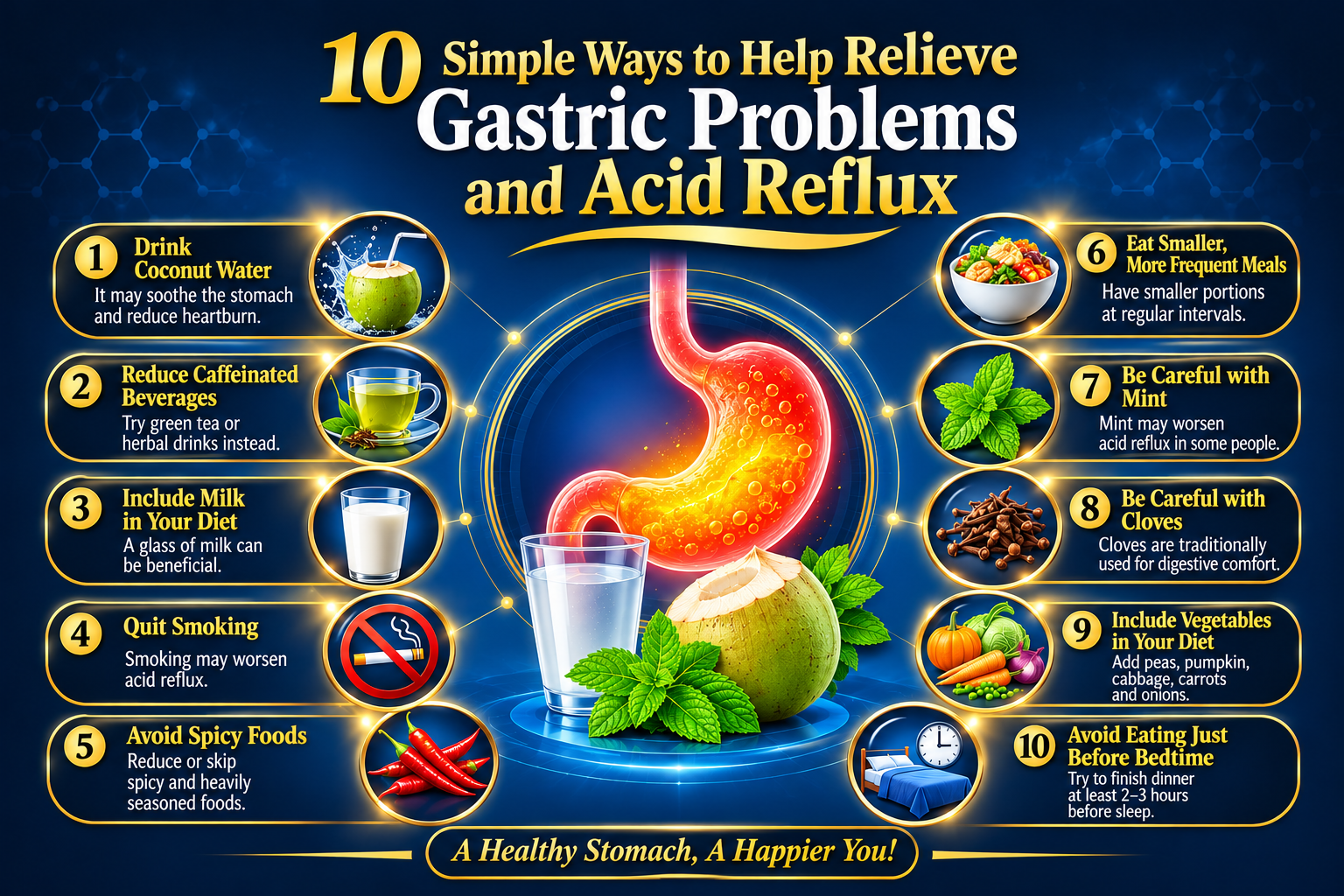
Although various medications are available to manage these symptoms, certain lifestyle and dietary habits may also help provide relief. Here are 10 simple approaches that may help you manage gastric discomfort naturally.
1. Drink Coconut Water
Coconut water may help soothe the stomach and provide relief from digestive discomfort and heartburn.
2. Reduce Caffeinated Beverages
Try limiting caffeinated drinks and consider alternatives such as green tea or herbal beverages as part of your daily routine.
3. Include Milk in Your Diet
A glass of milk can be included in your daily diet as a source of nourishment.
4. Quit Smoking
If you smoke, consider quitting. Smoking can contribute to acid reflux and may worsen its symptoms.
5. Avoid Spicy Foods
Reduce or avoid spicy and heavily seasoned foods in your diet, as they may trigger or worsen acidity and heartburn.
6. Eat Smaller, More Frequent Meals
Instead of eating large meals, try having smaller portions at regular intervals. Avoid going for long periods without eating.
7. Be Careful with Mint
Mint is traditionally used as a digestive ingredient. However, mint may worsen acid reflux in some people, so it is important to consider individual tolerance.
8. Be Careful with Cloves
Cloves are traditionally used in various home remedies for digestive discomfort. However, they are not an established treatment for chest pain or acid reflux.
9. Include Vegetables in Your Diet
Add nutritious vegetables such as peas, pumpkin, cabbage, carrots, and onions to your regular meals.
10. Avoid Eating Just Before Bedtime
Try to finish your dinner at least 2–3 hours before going to bed. This may help reduce acid reflux, particularly during the night.
Disclaimer
This article is intended for general health awareness and educational purposes only. Dietary and lifestyle changes may help manage occasional acid reflux, but they are not a substitute for professional medical advice, diagnosis, or treatment. Persistent or recurring symptoms should be evaluated by a qualified healthcare professional.
References
- National Institute of Diabetes and Digestive and Kidney Diseases (NIDDK): Eating, Diet, & Nutrition for GER & GERD
- American College of Gastroenterology: Guidelines for the Diagnosis and Management of GERD
- NHS: Heartburn and Acid Reflux