


Garlic is one of the most widely used medicinal spices in the world. We regularly add it to different dishes to enhance their flavour, but many people may not realise how many health-related properties this humble kitchen ingredient possesses.
For centuries, garlic has been valued for its potential health benefits and has been traditionally used to support various aspects of human health.
According to the US National Library of Medicine’s MedlinePlus, garlic has attracted considerable interest for its potential role in supporting health and possibly reducing the risk of certain cancers, including colon, rectal, stomach, breast, prostate, bladder and lung cancers. However, scientific evidence for cancer prevention remains limited.
Garlic is also known for its nutritional content. It contains carbohydrates, protein, phosphorus, calcium, riboflavin, copper, manganese, chlorine, selenium, zinc and vitamin C.
One of garlic’s most important active compounds is allicin, which is produced when garlic is crushed or chopped. Garlic also contains other beneficial compounds that have been studied for their potential antioxidant, antibacterial, antifungal and antiviral properties.
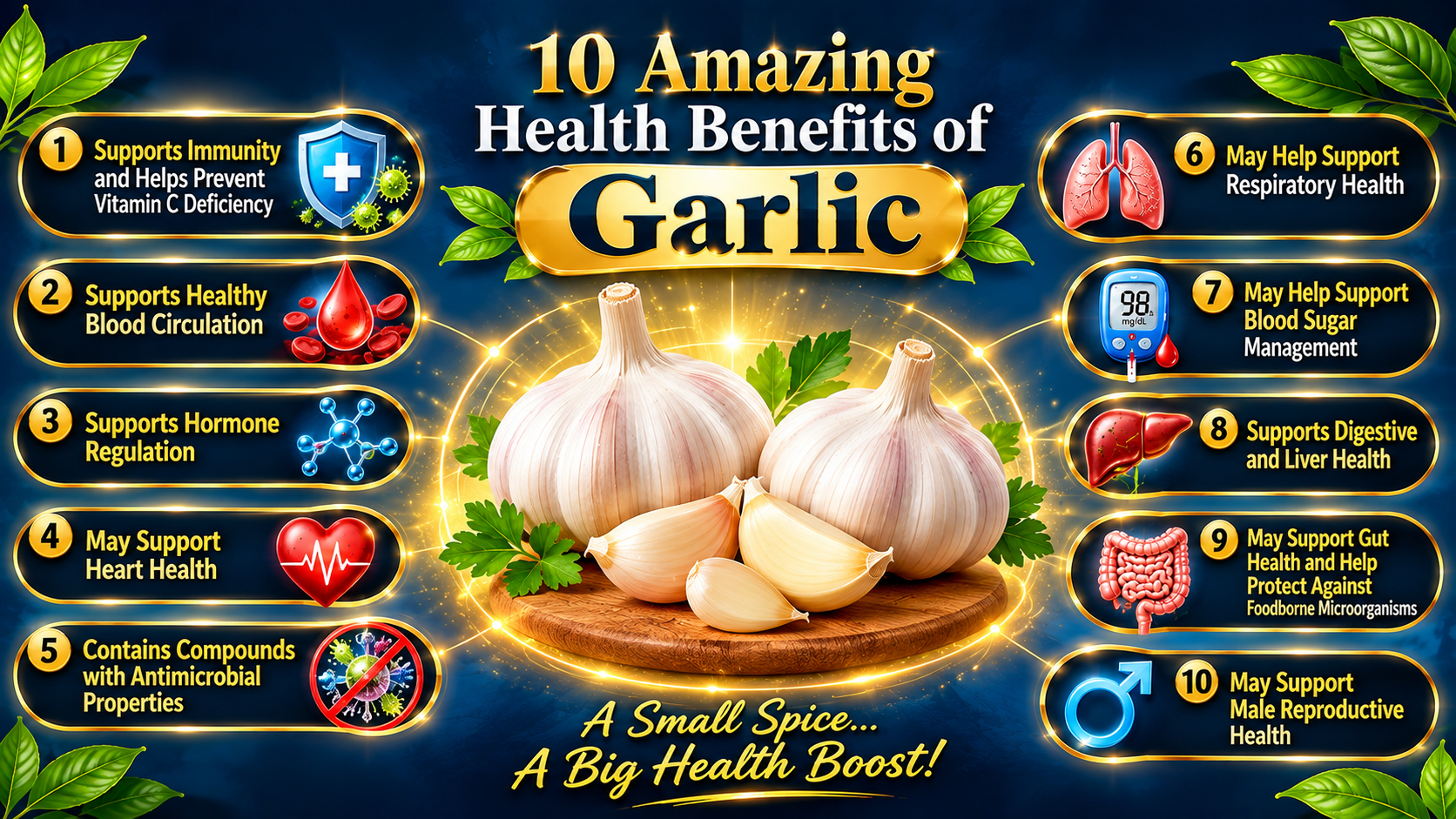
Here are 10 health benefits traditionally associated with garlic.
1. Supports Immunity and Helps Prevent Vitamin C Deficiency
Garlic contains vitamin C, an essential nutrient that supports the immune system and helps protect the body against vitamin C deficiency.
Adequate vitamin C intake also contributes to healthy blood vessels and supports normal tissue repair. Vitamin C deficiency can lead to scurvy, a condition that affects the body’s connective tissues.
2. Supports Healthy Blood Circulation
Garlic contains a chemical compound called ajoene, which has attracted scientific interest because of its potential effects on blood circulation.
Certain compounds in garlic may help reduce platelet aggregation, which plays a role in blood clot formation. Garlic has also been studied for its potential to help lower blood cholesterol levels.
3. Supports Hormone Regulation
Garlic contains sulfur-based compounds that play an important role in several biological processes within the human body.
These compounds have been studied for their potential influence on various physiological functions, including processes associated with hormone regulation.
4. May Support Heart Health
Garlic has long been associated with cardiovascular health.
Research suggests that garlic supplements may offer modest benefits in managing certain heart-related risk factors, including high blood pressure and elevated cholesterol levels.
Its active compounds have also attracted scientific attention for their potential role in supporting healthy blood vessels and circulation.
5. Contains Compounds with Antimicrobial Properties
One of garlic’s most well-known active ingredients is allicin.
This natural compound has demonstrated antibacterial and antimicrobial properties in laboratory studies. Researchers have investigated its potential activity against various microorganisms.
Garlic has traditionally been associated with supporting the body’s natural defences against infections, including those involving bacteria.
6. May Help Support Respiratory Health
Garlic has traditionally been used as a home remedy for common cold symptoms, sore throats and respiratory discomfort.
It has also been associated with traditional remedies for headaches, joint discomfort, asthma and bronchitis.
Some research has explored garlic’s potential role in supporting immune function, although evidence of its effectiveness against these conditions remains limited.
7. May Help Support Blood Sugar Management
Garlic has attracted attention for its potential benefits in maintaining healthy blood sugar levels.
Some studies suggest that garlic supplements may help reduce blood glucose levels to a small extent in people with diabetes.
Its active compounds are being studied for their possible role in supporting normal metabolic functions.
8. Supports Digestive and Liver Health
Garlic has traditionally been used to support digestion and overall digestive health.
Its natural compounds have attracted scientific interest because of their potential antioxidant and anti-inflammatory properties.
Garlic has also been studied for its possible effects on liver health and its potential role in supporting the body’s natural defence mechanisms.
9. May Support Gut Health and Help Protect Against Foodborne Microorganisms
Garlic contains compounds with antimicrobial properties that have been investigated for their activity against certain bacteria and other microorganisms.
Some researchers have explored its potential role in protecting against foodborne microorganisms and supporting digestive health.
However, garlic should not be considered a treatment for food poisoning or diarrhoea.
10. May Support Male Reproductive Health
Garlic has also attracted scientific interest for its potential role in male reproductive health.
Some research, particularly experimental studies, has investigated whether garlic’s antioxidant compounds may help protect sperm cells against oxidative stress.
Healthy sperm production is influenced by several factors, including nutrition and overall lifestyle. However, there is not enough reliable human evidence to establish garlic as a treatment for male infertility or a proven way to increase sperm count.
Conclusion
Garlic is much more than an ordinary kitchen spice. Its nutritional content and naturally occurring compounds, particularly allicin, have made it an interesting subject of scientific research.
From supporting cardiovascular health and healthy blood circulation to its potential antioxidant and antimicrobial properties, garlic continues to attract attention for its possible contributions to overall well-being.
Including garlic as part of a balanced diet can be a simple way to enjoy its nutritional benefits.
Disclaimer
This article is intended for general educational and informational purposes only. The health benefits discussed are based on traditional uses and available scientific research. Garlic is not a proven cure or substitute for medical treatment. Evidence for several claimed benefits remains limited. People with existing medical conditions or those taking medication should consult a qualified healthcare professional before using garlic supplements. Do not discontinue prescribed medication in favour of garlic or other natural remedies.
References
- National Center for Complementary and Integrative Health (NCCIH), National Institutes of Health (NIH) – Garlic: Usefulness and Safety.
https://www.nccih.nih.gov/health/garlic - MedlinePlus, US National Library of Medicine – Garlic.
https://medlineplus.gov/druginfo/natural/300.html - National Institutes of Health (NIH), Office of Dietary Supplements – Dietary Supplements for Immune Function and Infectious Diseases.
https://ods.od.nih.gov/factsheets/Immunefunction-HealthProfessional/ - Memorial Sloan Kettering Cancer Center – Garlic: Potential Uses, Benefits and Side Effects.
https://www.mskcc.org/cancer-care/integrative-medicine/herbs/garlic