


New mothers need to pay attention to many aspects of their daily lives, especially when their babies are being breastfed. Along with eating nutritious foods, mothers should also be mindful of certain foods that may affect their babies.
In some cases, babies may become reluctant to breastfeed or experience discomfort after feeding. Therefore, mothers should remain aware of their dietary choices during this important stage.
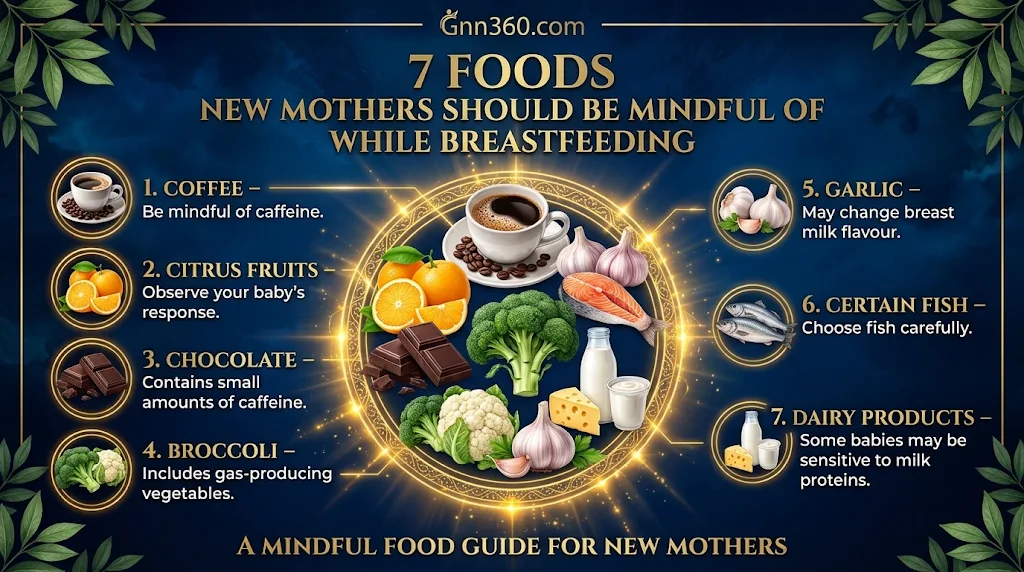
Here are seven foods that new mothers may need to be cautious about while breastfeeding.
1. Coffee
When you drink coffee or tea, some of the caffeine passes into breast milk. Young babies cannot process caffeine as efficiently as adults. As a result, they may experience stomach discomfort, irritation, or difficulty sleeping. Therefore, mothers should be mindful of their caffeine intake while breastfeeding.
2. Citrus Fruits
Some mothers prefer to limit citrus fruits during breastfeeding. These fruits contain natural acids, which are sometimes associated with concerns about heartburn, stomach discomfort, or skin reactions in babies. Instead of citrus fruits, mothers can choose other sources of vitamin C, such as papaya and mango.
3. Chocolate
Mothers may also want to monitor their chocolate consumption during this period. Chocolate, particularly dark chocolate, contains caffeine, which may affect a baby’s well-being if consumed in large amounts. If a mother notices that her baby experiences discomfort or develops a skin rash after she eats chocolate, she may consider avoiding it.
4. Broccoli
Broccoli is highly nutritious, but some mothers are concerned about eating gas-producing vegetables while breastfeeding. Broccoli and cauliflower are among the vegetables commonly associated with gas and bloating. Mothers may therefore choose to monitor how their babies respond when these vegetables are included in their diet.
5. Garlic
If you regularly consume raw garlic or garlic-based dishes, it may be worth paying attention to your baby’s response. The smell and flavour of garlic can pass into breast milk, and some babies may not enjoy the change in taste.
6. Certain Types of Fish
Fish is an excellent source of protein and fatty acids. However, mothers should be mindful of the types of fish they consume. Certain fish, including some varieties of tuna and other fish mentioned in dietary recommendations, may need to be limited or avoided.
7. Dairy Products
Milk and dairy products contain a significant amount of protein. Some babies may be sensitive to certain proteins, particularly cow’s milk protein.
When a breastfeeding mother consumes dairy products such as cheese, paneer, sour yogurt, or other milk-based foods, traces of cow’s milk protein may pass into breast milk. In babies who are sensitive to these proteins, this may contribute to digestive discomfort, gas, stomach pain, and other symptoms.
A mother’s diet plays an important role in her overall well-being during breastfeeding. Being mindful of food choices and observing how babies respond can help mothers make informed dietary decisions.
Disclaimer
This article is intended for general informational and educational purposes only. It should not be considered a substitute for professional medical advice, diagnosis, or treatment. Every mother and baby may have different nutritional needs and sensitivities. Consult a qualified healthcare professional or registered dietitian before making significant dietary changes while breastfeeding.
Reference Sources
These reputable sources are useful:
- CDC – Maternal Diet and Breastfeeding
- NHS – Foods and Drinks to Avoid When Breastfeeding
- ACOG – Breastfeeding Your Baby